Pet Supplement Manufacturing: How to Choose a Contract or Private Label Partner (US and Canada)

Quick answer: Most pet brands handle pet supplement manufacturing by hiring a contract manufacturer, either to make a ready-made private label formula or a custom one. Expect minimum orders in the low thousands of bottles and lead times of roughly 4 to 10 weeks. Before you sign, confirm how your product is regulated: in the US it is treated as an animal food or a drug, and in Canada most fall under Health Canada’s veterinary health product rules.
Last updated: November 6, 2026 · General information, not legal or regulatory advice.
Joint chews, calming bites, probiotic powders and skin-and-coat oils are among the most crowded shelves in pet retail. Yet most of the brands behind them do not own a factory. They rely on pet supplement manufacturing partners who formulate, produce, test and package the product for them.
Picking the wrong partner is expensive. You can end up with a minimum order you cannot sell through, a label that fails a state review, or a product Canada will not let you import. Most guides on this topic are written by manufacturers selling their own services.
This guide is neutral. We cover the three ways to get a supplement made, how the rules differ in the US and Canada, typical minimums and lead times, a worked cost example, and the questions to ask a pet supplement contract manufacturer before you sign anything.
What pet supplement manufacturing involves
Making a pet supplement is more than mixing ingredients. A full production cycle has five stages, and you need to know who owns each one:
- Formulation. Choosing ingredients, amounts per serving, flavor and format. This is where palatability is won or lost. A chew a dog refuses is a returned product.
- Ingredient sourcing. Buying raw materials with a certificate of analysis (COA), a lab report that confirms identity and purity.
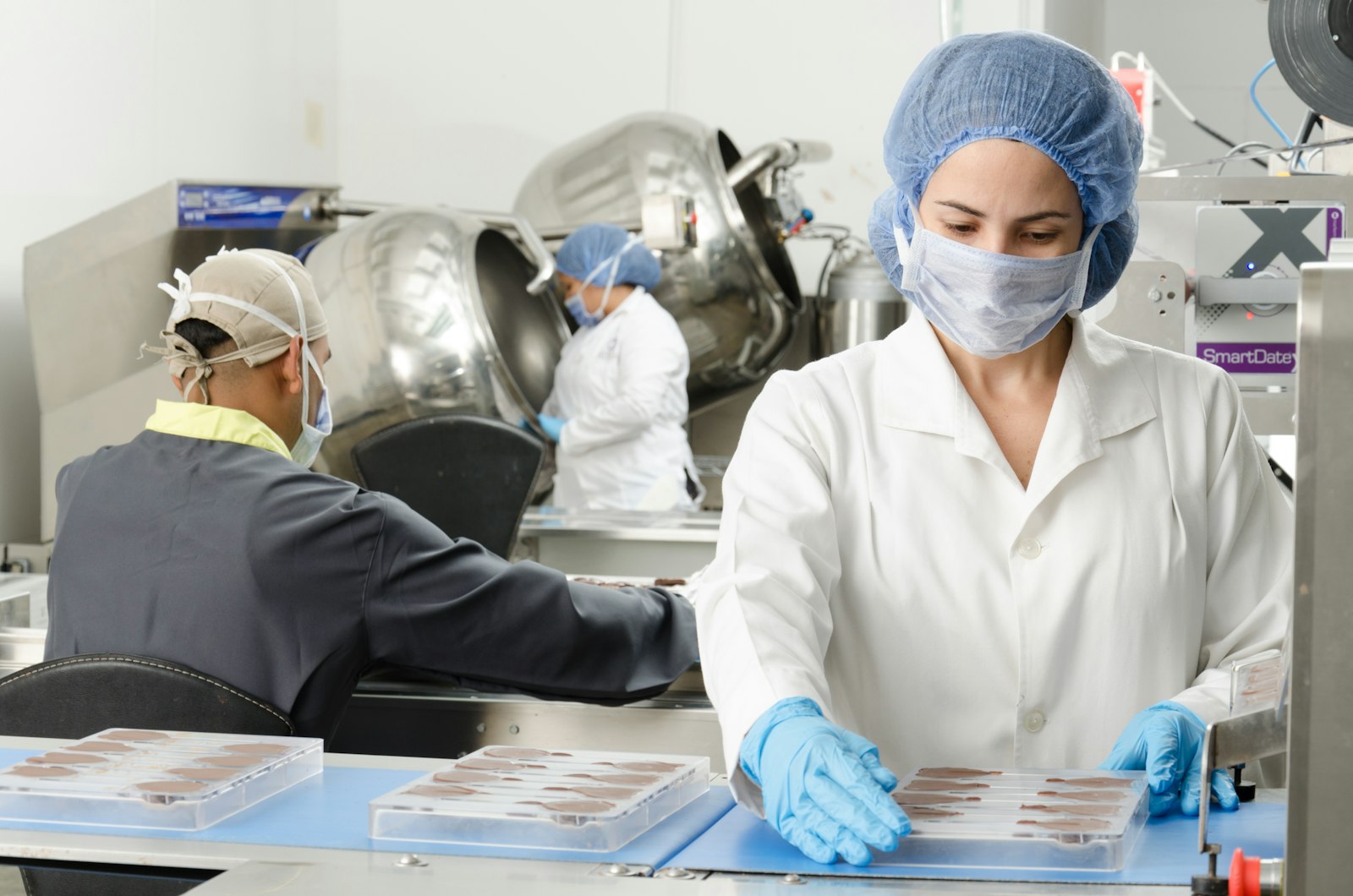
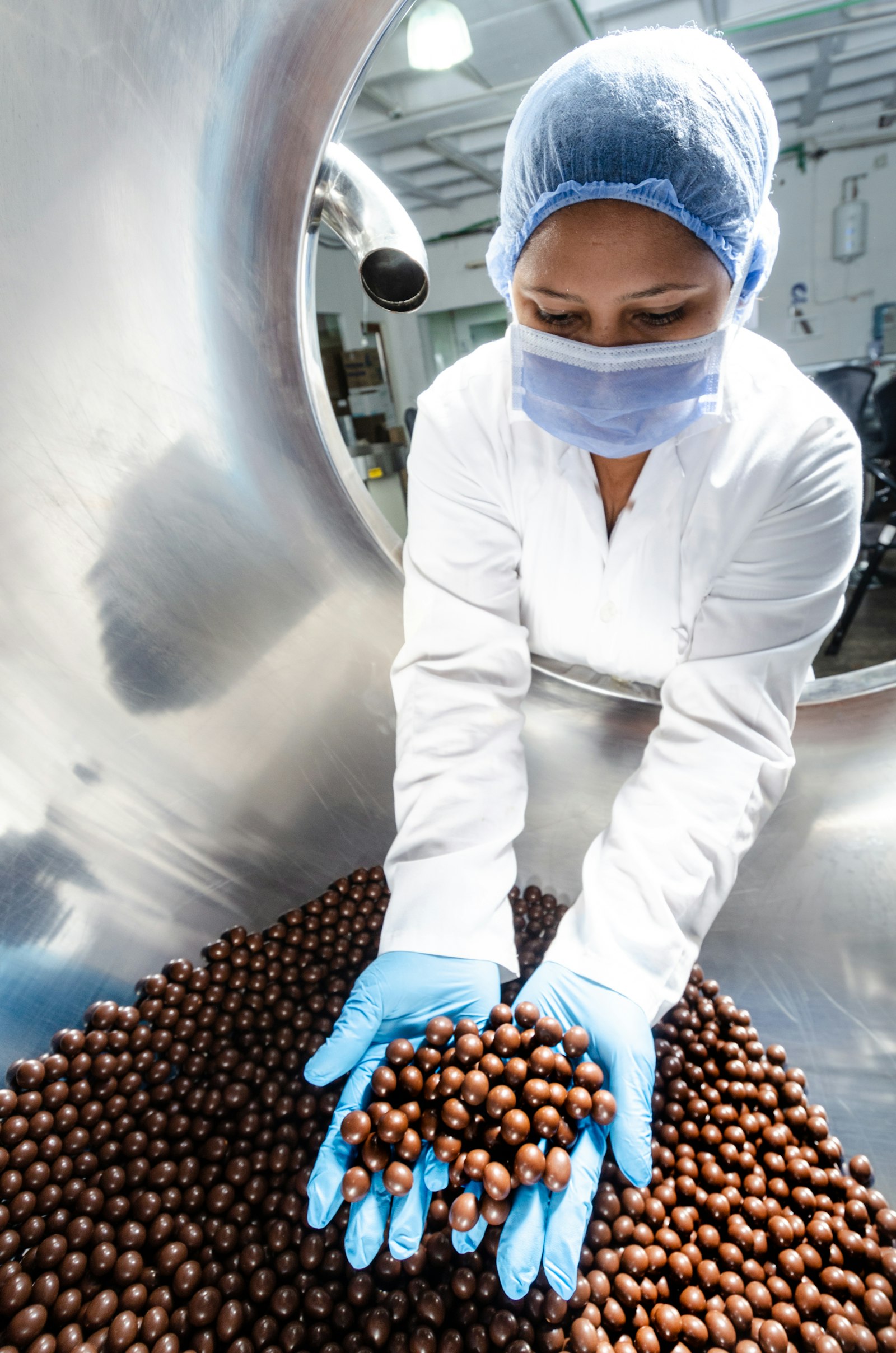
- Production. Blending, forming soft chews or tablets, filling capsules or bottling liquids under good manufacturing practices (GMP).
- Testing. Checking finished batches for potency and contaminants, and running stability tests that support your shelf life.
- Packaging and labeling. Filling bottles, tubs or pouches and applying labels that meet the rules in each country you sell in.
Your manufacturer may handle all five or only production. Get the split in writing. Gaps usually show up in testing and labeling, which are exactly the areas regulators look at.
Private label vs custom formula vs in-house production
There are three main routes to market. For most new brands, the choice is between the first two:
- Private label (also called white label). You choose from the manufacturer’s existing, proven formulas and put your brand on the label. It is fast and cheap to start, but competitors can sell a near-identical product.
- Custom formulation. The manufacturer develops a formula to your brief. It takes longer and costs more, but you can own the recipe and build a real point of difference.
- In-house manufacturing. You build or buy your own facility. This only makes sense at scale, because you take on GMP systems, equipment, staff and audits yourself.
| Factor | Private label | Custom formula (contract) | In-house |
|---|---|---|---|
| Time to first product | Fastest; formula already exists | Slower; adds development and testing | Slowest; facility setup first |
| Upfront cost | Lowest | Moderate (development fees, larger runs) | Highest (equipment, compliance staff) |
| Differentiation | Low; others may sell the same formula | High, if you own the formula | High |
| Formula ownership | Usually stays with the manufacturer | Negotiable; get it in the contract | Yours |
| Regulatory work | Shared; you still own your claims and label | Shared; you own claims and label | All yours |
| Best for | Testing a market or adding a line extension | Brands with a clear niche and some budget | Established brands with steady volume |
One point founders miss with private label dog supplements: ask whether the manufacturer sells the same formula to other brands, and whether you can buy exclusivity. If the answer is “no,” your only edge is branding and marketing, which gets expensive fast.
How pet supplements are regulated in the US
In the US there is no legal category called “dietary supplements” for animals. AAFCO’s guidance for startups says federal law does not recognize such a category, and the FDA’s Center for Veterinary Medicine announced back in 1996 that the human supplement law (DSHEA) does not apply to animal products.
Instead, a pet supplement is treated as either an animal food or a drug, based on its intended use. Your label and marketing show that intended use. In practice, the rules break down like this:
- Products in food form (for example, a chew with nutritional value or a topper added to meals) are generally regulated as animal food. AAFCO notes that feed label claims are limited to taste, aroma or nutritive value. Many states require feed registration.
- Dosage-form products (tablets, capsules, powders or liquids meant to support a body structure or function) sit in a gray area. Regulatory attorneys at Venable, writing in Nutraceuticals World, explain that the FDA has historically treated many of these as low regulatory priority when they make no disease claims and raise no safety concerns. Some states also require them to be registered.
- Disease claims change everything. Words like “treats arthritis,” “prevents infection” or “cures anxiety” signal a drug use. Without FDA approval, that can make your product an unapproved new animal drug.
The role of NASC and its Quality Seal
The National Animal Supplement Council (NASC) is a nonprofit industry group that fills much of the gap left by federal law. To display its Quality Seal, a company must pass an independent facility audit. NASC lists four core requirements: a quality control manual, an adverse event and complaint system, label compliance, and ingredient-specific warning statements.
According to a 2024 Pet Age feature on the program, a full re-audit is required every two years to keep the seal. It gives retailers and shoppers a quick sign that a company’s quality system has been audited, so ask whether your manufacturer is a NASC member and whether your brand can join, too.
Food safety rules for the facility
If your product is regulated as animal food, the plant making it falls under the FDA’s Preventive Controls for Animal Food rule (21 CFR Part 507) unless an exemption applies. The FDA says covered facilities must follow current good manufacturing practices (CGMPs), analyze hazards and keep a written food safety plan. Ask your manufacturer for its FDA facility registration and its most recent audit results.
What may change in 2027
The rules may tighten. NASC has drafted an Animal Health Supplement Act that would give companion animal supplements their own legal category, with FDA product registration, formal cGMP rules, adverse event reporting and a grandfather list of current ingredients. As of an October 2026 Petfood Industry report, the bill had not been introduced, and NASC expects introduction when the next Congress is seated in January 2027.
Our advice: choose a manufacturer that already works to NASC standards. If a federal framework passes, those brands will have the least catching up to do.
How pet supplements are regulated in Canada
Canada is clearer on paper. Since November 13, 2017, most low-risk pet supplements in dosage form have been regulated as veterinary health products (VHPs). Health Canada describes VHPs as low-risk products that maintain or promote animal health, such as vitamins, minerals and traditional medicines. They cannot be sold to treat, prevent or cure disease.
Health Canada’s key VHP requirements are:
- Notification. Notify Health Canada at least 30 days before you sell a VHP or change one already notified, and before you import one.
- Approved ingredients. Every active ingredient must appear on Health Canada’s List C for veterinary health products.
- Label statement. Labels must carry “Veterinary health product / Produit de santé animale,” plus any mandatory statements from List C.
- GMP. Anyone who manufactures, packages, labels, imports, distributes or stores VHPs must follow Part 3 (Good Manufacturing Practices) of the Natural Health Products Regulations.
- Safety reporting. Companies must report serious adverse reactions to Health Canada.
Products with disease claims or ingredients outside List C are veterinary drugs, which need a much more involved approval. Food-form products such as functional treats are handled differently. Our guide on how to start a dog treat business covers Canadian pet food labeling rules in detail.
| Question | United States | Canada |
|---|---|---|
| Is there a “supplement” category for pets? | No. Products are animal food or drugs by intended use. | Yes, in effect: most low-risk dosage-form products are veterinary health products (VHPs). |
| Who oversees it? | FDA’s Center for Veterinary Medicine and state feed control officials; NASC runs voluntary self-regulation. | Health Canada (VHP Notification Program). |
| Pre-market step | State feed or product registration where required; no federal pre-approval for compliant food-form products. | Notification at least 30 days before sale or import. |
| Manufacturing standard | FDA CGMPs for animal food facilities; NASC audit for seal holders. | GMPs in Part 3 of the Natural Health Products Regulations. |
| Disease claims | Not allowed without drug approval. | Not allowed for VHPs. |
| Label language | English; truthful, no disease claims. | “Veterinary health product / Produit de santé animale” plus bilingual requirements. |
Pet supplement manufacturing minimums, formats and lead times
Format drives your costs, your minimums and how pets accept the product. Soft chews are popular with dog owners because they feel like a treat. Powders are flexible and cheap to make. Capsules and tablets suit smaller doses but can be harder to give.
Minimum order quantities (MOQs) vary widely, and most manufacturers only share them on request. One US contract manufacturer that publishes its minimums, Superior Supplement Manufacturing, listed these on its pet supplement page when we checked in November 2026:
| Format | Published minimum (finished bottles) | Published minimum (bulk) | Notes |
|---|---|---|---|
| Soft chews, chewable tablets, capsules | 2,500 bottles of 60 count | 300,000 pieces | Most common starting point for dog supplements |
| Softgels | 17,000 bottles of 60 count | 1,000,000 softgels | High minimums; common for fish oils |
| Powders | 2,000 units | 2,000 kg | Flexible dosing; easy to mix into food |
| Liquids | 5,000 units | 500 gallons | Good for oils and pumps |
Lead times also vary. Among the manufacturer pages we reviewed, quoted times ranged from about 4 weeks for the fastest private label orders to 8 to 10 weeks for production and shipping. Custom formulas take longer, because development, palatability trials and stability testing come first. Plan for several months from brief to first delivery.
What a first production run can cost: a worked example
Pet supplement manufacturing prices are rarely published, so treat any number you see online with care. The example below is hypothetical. It shows the cost lines to ask about, not real quotes. Replace every figure with your own.
| Cost line (hypothetical, USD) | Amount | What to ask your manufacturer |
|---|---|---|
| 2,500 bottles of 60 hip-and-joint soft chews at $5.00 each | $12,500 | Does the unit price include the bottle, lid, seal and label application? |
| Third-party finished-product testing | $1,500 | Which tests are included, and which are extra? |
| Label and packaging design, compliance review | $2,000 | Will they review your label against US state and Canadian rules? |
| Freight to your warehouse or 3PL | $800 | Is pricing ex-works (you arrange pickup) or delivered? |
| Total landed cost | $16,800 | |
| Landed cost per bottle | $6.72 |
Now run the margin check. At a $39.99 retail price, a store that buys at roughly half of retail pays you about $20, leaving around $13 per bottle before marketing. Sold direct, you keep more per bottle but pay for shipping and customer acquisition.
The bigger risk is cash. You pay for 2,500 bottles up front, and supplements carry an expiry date. If you sell 100 bottles a month, that run lasts two years. Check that your shelf life covers it. Our product launch strategy for small pet brands shows how to test demand before you commit to a large run.
Is the pet supplement market still growing?
Yes, but estimates differ sharply. That matters when you plan inventory. A 2025 William Blair white paper, citing CIL market models, put US pet supplement retail sales at about $2.5 billion in 2025 and projected growth of around 15% a year. William Blair also estimated the contract pet supplement manufacturing segment at about $1.3 billion and quoted insiders who warned manufacturing capacity could become a pain point.
Freedonia Group data, reported by NutraIngredients in June 2026, paints a cooler picture: US pet supplement sales growth fell below 5% in 2024 and below 3% in 2025. The two sources measure different things and use different models. The safe read is that demand is real, but you cannot rely on category growth alone to sell your product.
For wider context on where pet spending is heading, including the rise of functional treats, see our breakdown of pet food trends for 2026.
How to choose a pet supplement contract manufacturer
In pet supplement manufacturing, your partner shapes your quality, cash flow and compliance. Shortlist three to five manufacturers, then use the same questions with each. The answers, and how quickly they come, tell you a lot about how the relationship will run.
Quality and compliance questions
- Is the facility FDA-registered, and when was its last FDA or state inspection?
- Are you a NASC member with a current Quality Seal audit? Can I see the audit date?
- Do you make products for Canada, and do you follow the GMPs Health Canada requires for VHPs?
- How do you test incoming ingredients and finished batches? Will I get a COA for every lot?
- Do you run stability testing to support the expiry date on my label?
- How do you handle complaints, adverse events and recalls, and what is my role?
Commercial questions
- What is the MOQ for my format, and is it lower for a stock private label formula?
- Who owns a custom formula, and can I move it to another manufacturer later?
- Do you sell the same private label formula to other brands? Is exclusivity available?
- What are the development fees, deposit terms and payment schedule?
- What is your lead time for a first order and for reorders, and how have you performed against it this year?
- Can you share references from pet brands of a similar size?
Watch for red flags: no COAs, vague answers on formula ownership, pressure to add disease claims to “make it sell,” or a manufacturer that cannot explain how US and Canadian rules differ.
From idea to first delivery: a step-by-step plan
Here is the order we recommend for your first round of pet supplement manufacturing:
- Define the job. Pick one pet, one need and one format, such as hip and joint support soft chews for large senior dogs.
- Write your claims list first. List every benefit you want to state. Remove anything that sounds like treating, preventing or curing disease.
- Decide your markets. US only, Canada only or both. This decides ingredients (List C in Canada), labels and registrations.
- Shortlist and quote. Send the same brief to three to five manufacturers and compare quotes line by line.
- Sample and test. Run palatability trials with real pets and check that samples match the spec.
- Clear the paperwork. Complete state registrations where needed in the US, or VHP notification at least 30 days before sale in Canada.
- Approve and produce. Sign off on the final label proof, pay the deposit and confirm the delivery date.
- Receive and check. Match the delivered lot to its COA before you sell a single unit.
When the product is selling and reorders are steady, larger retailers become realistic. Our pillar guide on how to sell on Chewy explains the documentation and fulfillment standards a major pet retailer expects from vendors.
Common mistakes in pet supplement manufacturing
These are the problems that most often sink first-time supplement brands:
- Claims that outrun the rules. “Stops itching” or “cures anxiety” turns a supplement into an unapproved drug in both countries.
- Treating Canada as a relabel. An ingredient that is fine in the US may not be on List C, and you need notification before you import.
- Ordering past your shelf life. A low unit price on a huge run is no bargain if stock expires in your warehouse.
- Skipping palatability testing. Pets vote with their mouths, and refusals show up as bad reviews and no reorders.
- No contract on formula ownership. Without it, you may not be able to switch manufacturers without starting over.
The bottom line
Good pet supplement manufacturing starts with the right partner and a clear regulatory plan. Start with private label if you need speed and a market test. Move to a custom formula when you have a niche worth owning. In both cases, insist on COAs, stability data and NASC-level quality systems, keep your claims away from disease language, and plan Canadian requirements from day one. For more guides on building and scaling a pet product line, browse our Pet Brand Growth section.
How we researched this article
We reviewed guidance from AAFCO, the FDA’s Center for Veterinary Medicine, Health Canada’s Veterinary Health Products program and NASC, plus legal and trade analysis from Covington, Venable, Petfood Industry and NutraIngredients, market data from William Blair and Freedonia, and published terms from US contract manufacturers. This is general information, not legal or regulatory advice. Confirm current rules with the relevant authorities before you launch.
Frequently asked questions
How do I start a pet supplement brand without a factory?
Work with a pet supplement contract manufacturer. Start with a private label formula to test demand quickly, or pay for a custom formula if you need a clear point of difference. Confirm the manufacturer’s quality systems, get certificates of analysis for every lot, and settle formula ownership, minimums and lead times in a written contract before you pay a deposit.
What is the minimum order for private label pet supplements?
It depends on the manufacturer and format. One US manufacturer’s published minimums in November 2026 were 2,500 bottles of 60 count for soft chews, chewable tablets and capsules, 2,000 units for powders and 17,000 bottles for softgels. Stock private label formulas sometimes allow smaller runs, so always ask.
Do pet supplements need FDA approval?
Not usually, as long as they make no disease claims. US law has no animal supplement category, so the FDA treats a product as an animal food or a drug based on its intended use. Food-form products may need state feed registration. Claims to treat, prevent or cure disease can make a product an unapproved animal drug.
Can I sell pet supplements in Canada?
Yes. Most low-risk dosage-form pet supplements are veterinary health products. Health Canada requires notification at least 30 days before sale or import, ingredients from its List C, the statement “Veterinary health product / Produit de santé animale” on the label, GMP compliance and reporting of serious adverse reactions. Disease claims are not allowed.
What is the NASC Quality Seal?
It is a mark from the National Animal Supplement Council, a nonprofit industry group. Companies earn it by passing an independent audit covering a quality control manual, adverse event reporting, label compliance and required warning statements. A full re-audit is required every two years to keep using the seal.
How long does pet supplement manufacturing take?
For a stock private label formula, manufacturer pages we reviewed quoted from about 4 weeks to 8 to 10 weeks for production and shipping. Custom formulas take longer because development, palatability trials and stability testing come first. In Canada, add at least 30 days for VHP notification before sale.