
How to choose a dog or cat food
Start with life stage. A food labelled for growth or "all life stages" is built for puppies or kittens, while adult maintenance formulas assume growth has finished. Large-breed puppies are a special case: they need a formula designed for dogs that will be big as adults, with controlled calcium for steady bone growth. Kittens need more protein, fat and calories per bite than adult cats.
Next, read the AAFCO nutritional adequacy statement on the bag or can. It tells you which life stage the food is complete and balanced for, and how that was established. "Animal feeding tests using AAFCO procedures" means the recipe went through a feeding trial. "Formulated to meet the AAFCO nutrient profiles" means it was designed to the nutrient levels on paper. Both are legitimate; a feeding trial is an extra step some owners prefer.
Then look at your animal. Dogs with touchy digestion often do well on a single main protein with digestible carbohydrates such as rice and oatmeal, which is why salmon-and-rice formulas are popular. If your dog vomits regularly or has ongoing loose stool, see your vet before changing food, and our guide on a dog throwing up yellow bile in the morning explains when it is likely harmless. For cats, indoor formulas focus on calorie control, hairballs and litter box odour, while wet food adds moisture. If your cat brings up hairballs or food often, our article on why cats throw up covers what is normal and what is not.
Finally, avoid DIY additions that unbalance a complete food. A little cooked egg is fine for most dogs, as our piece on whether dogs can eat eggs explains, but large extras dilute the nutrition the recipe was built around.
Dry, wet or both?
Dry food is convenient and keeps well once the bag is opened. Wet food adds a lot of water: the Pro Plan urinary can on this page lists up to 78% moisture on its Canadian label, against 8 to 10% for the dry foods here. Many cat owners use both, with a measured portion of dry and wet as a separate meal. For cats on a urinary-support food, ask your vet before mixing, since Purina's label advises pairing it only with other urinary-health foods. Dogs generally do well on a complete dry food alone, and a good kibble does not need toppers to be balanced.
One more label tip: guaranteed analysis figures are "as fed," so a wet food showing 12% protein is not lower in protein than a kibble showing 27% once you account for the water. Compare foods on a dry matter basis, or ask your vet to do the maths with you.
Our picks compared
| Product | Type | Best for | Ongoing cost or key spec | Notable |
|---|---|---|---|---|
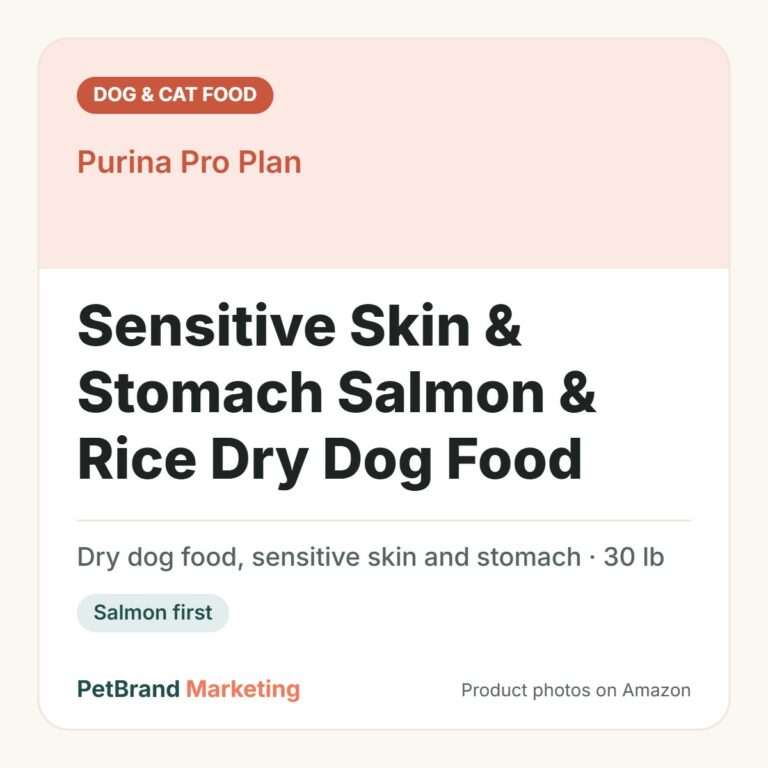
| Purina Pro Plan Sensitive Skin & Stomach Salmon & Rice | Dry dog food | Adult dogs with sensitive digestion | 30 lb (13.6 kg); 26% min protein | AAFCO feeding trial; no corn, wheat or soy |
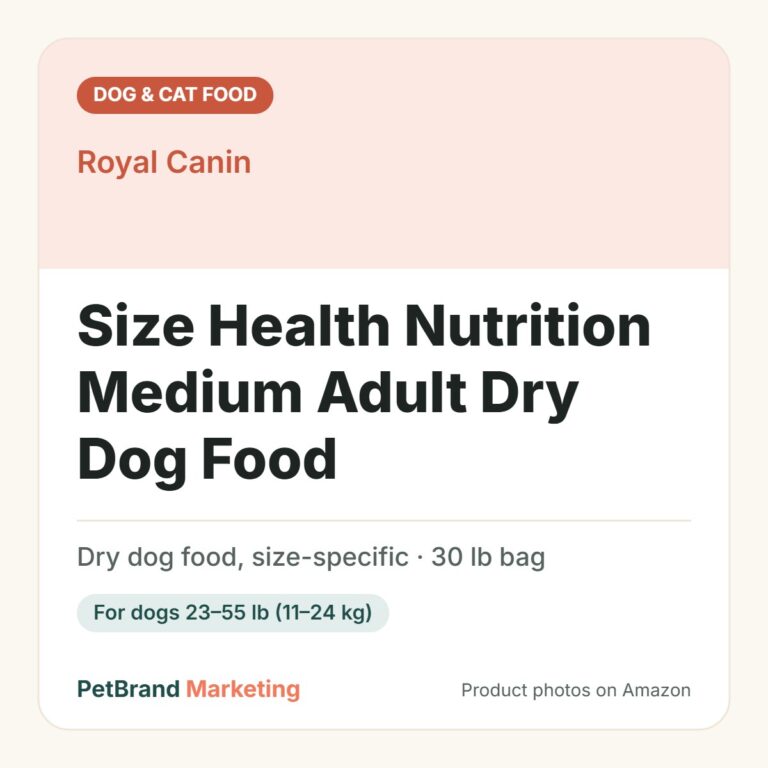
| Royal Canin Medium Adult | Dry dog food | Medium breeds 23–55 lb | 30 lb; 23% min protein | Size-specific kibble |
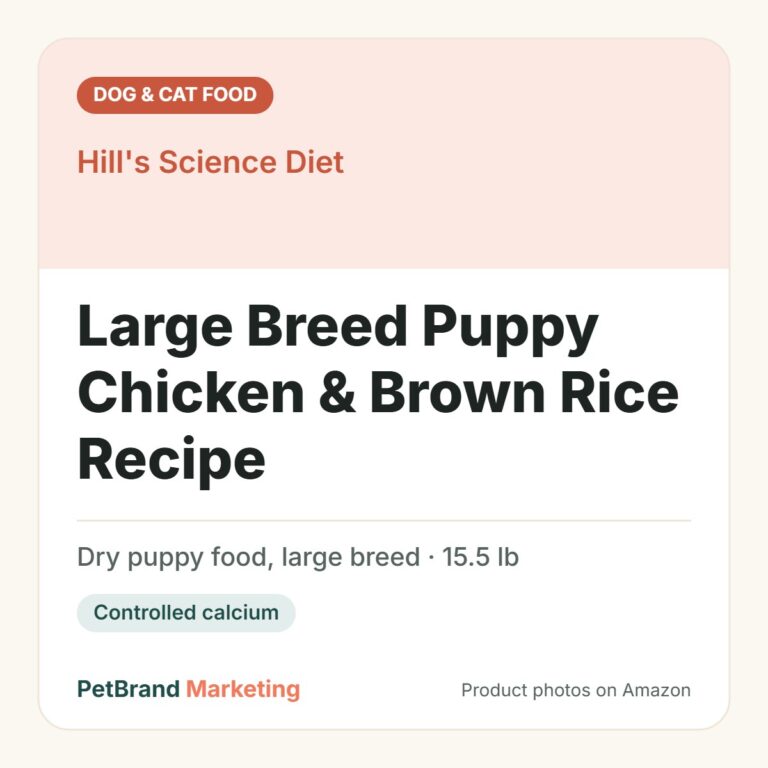
| Hill's Science Diet Large Breed Puppy | Dry puppy food | Puppies headed past 55 lb | 15.5 lb (7.03 kg); DHA 0.03% min | Controlled calcium for bone growth |
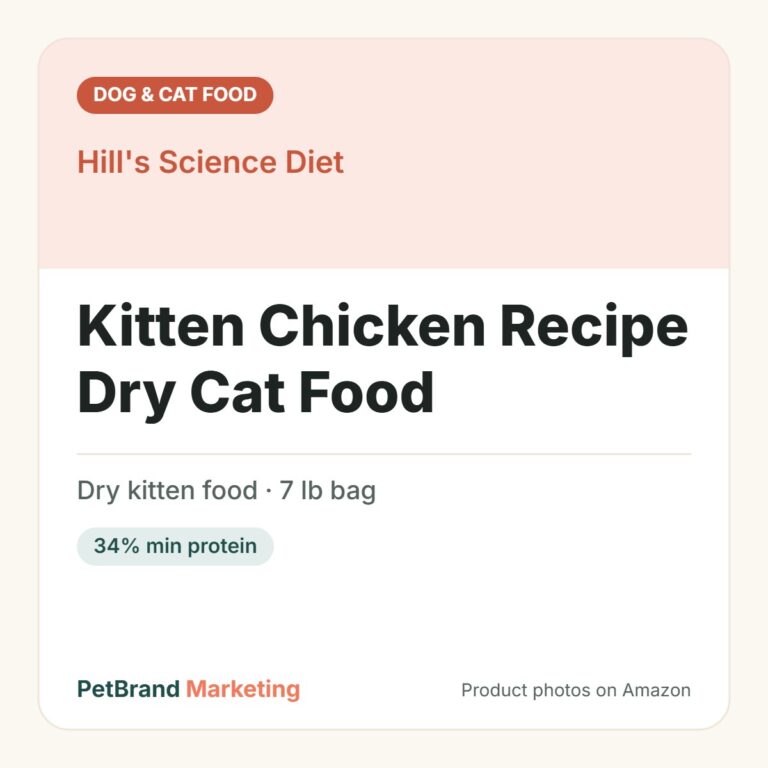
| Hill's Science Diet Kitten Chicken Recipe | Dry kitten food | Kittens up to 1 year | 7 lb; 34% min protein | AAFCO feeding trial for growth |
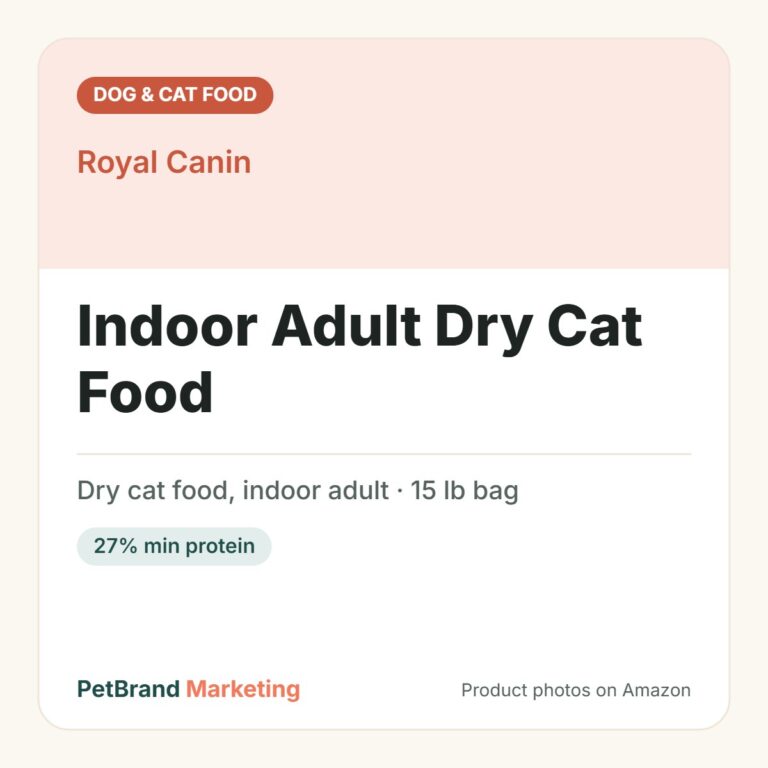
| Royal Canin Indoor Adult | Dry cat food | Indoor cats aged 1–7 | 15 lb; 27% min protein | Fibre blend for hairballs |
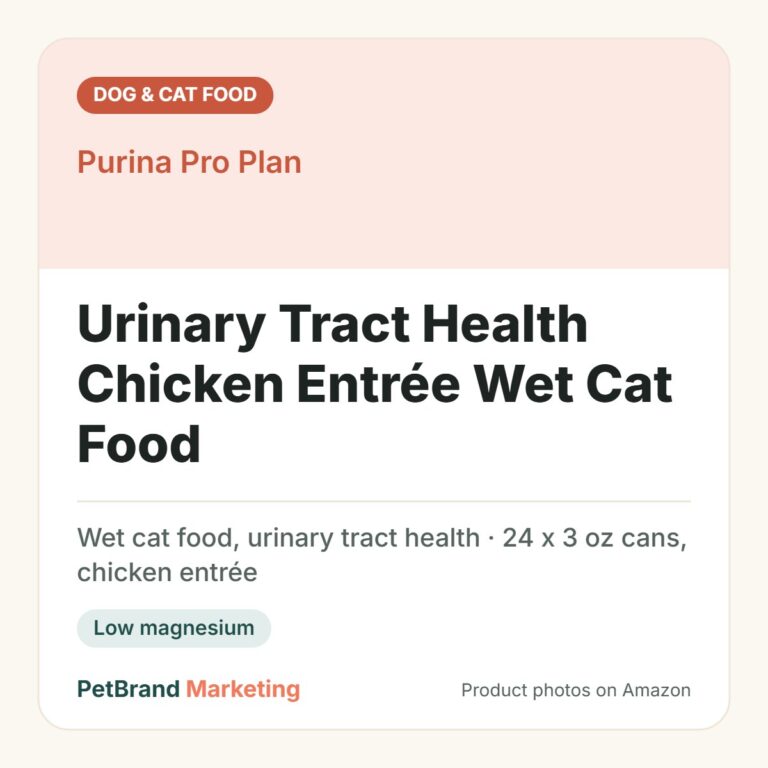
| Purina Pro Plan Urinary Tract Health wet | Wet cat food | Adult cats needing urinary support | 24 x 3 oz cans | Low magnesium; lowers urinary pH |
US vs Canada notes
- Same ASINs, different units: all six picks use one ASIN on both stores, but Canadian listings usually show kilograms (13.6 kg for the 30 lb Pro Plan bag, 7.03 kg for the 15.5 lb Hill's puppy bag).
- Recipe names change: Hill's has renamed its large-breed puppy recipe from Chicken Meal & Oats to Chicken & Brown Rice, so older listings and bags may show either name.
- Wet cat food labels: the Pro Plan urinary can is titled "Chicken Entrée in Gravy" on Amazon.com and on Purina's sites, and the US and Canadian brand pages list slightly different ingredient decks and can sizes. Read the label on the case you receive.
- Royal Canin naming: Canadian retailers often list the cat formula under its full Feline Health Nutrition Indoor Adult name.
Switching foods without upsetting a stomach
Any change of food is easier when it is gradual. Mix the new recipe into the old one over several days, following the transition guidance printed on the bag and your vet's advice, and watch stool quality and appetite as you go. Feeding amounts on the bag are a starting point only; your vet can adjust them for your pet's weight and activity.
Buy from listings shipped and sold by Amazon where possible, check the best-before date on arrival, and keep dry food in its original bag inside a closed container so you still have the lot number if there is ever a recall.
Frequently asked questions
What is the best kitten food on this list?
Hill's Science Diet Kitten Chicken Recipe is our kitten pick. Hill's says its AAFCO statement is backed by feeding tests for growing kittens, and it lists DHA from fish oil, prebiotics and a minimum of 34% protein. It is a dry food, so many owners also offer some wet food for moisture. Check the bag's guidance and your vet's advice on amounts.
What is the best dog food for a sensitive stomach here?
Purina Pro Plan Sensitive Skin & Stomach Salmon & Rice is the one built for that job. Salmon is the first ingredient, it includes oatmeal and prebiotic fibre, and it has no corn, wheat or soy. Purina says it passed AAFCO feeding tests for adult maintenance. If your dog has frequent vomiting or diarrhea, see your vet before switching.
Are these foods the same in Canada and the US?
Mostly. Each pick uses the same ASIN on Amazon.ca and Amazon.com, and the Canadian Pro Plan salmon listing shows the same first ingredients and AAFCO statement as the US one. Differences show up in units, recipe names and some wet food labels. The Pro Plan urinary can, for example, has slightly different ingredients on the US and Canadian brand pages.
Do I need a vet diet for urinary issues, or will Pro Plan Urinary Tract Health do?
Pro Plan Urinary Tract Health is a retail food that Purina says helps maintain urinary tract health by lowering urinary pH and providing low dietary magnesium. It is not a prescription diet. If your cat is straining, peeing outside the box or passing blood, that is an urgent vet visit, and your vet will decide which food fits.
Why does the AAFCO statement matter?
It is the clearest sign that a food is complete and balanced, and for which life stage. A puppy should eat a growth formula and an adult a maintenance or all-life-stages formula. The statement also says whether the claim rests on feeding trials or on formulation to nutrient profiles. A food without one is best kept as an occasional extra, not a main diet.