How to Become a Dog Groomer: Training, Costs and Licensing (US and Canada)

Quick answer: To become a dog groomer, get hands-on experience with dogs, then train through a grooming school, an online course with in-person practice, or an apprenticeship under an experienced groomer. Most people are job-ready in a few months to a year. Neither country has a national groomer license, and most rules apply to grooming businesses rather than individual groomers.
Last updated: November 10, 2026 · General information, not legal or career advice.
If you love dogs and like working with your hands, learning how to become a dog groomer can look like the perfect move. There is no degree to earn and no national exam to pass. That freedom is also the confusing part. Online, you will find grooming schools, online courses, apprenticeships and certifications, and every one of them claims to be the best path.
This guide cuts through it. We cover what groomers actually do, the licensing rules that apply in the US and Canada, each training path with real costs, how long it takes, what groomers earn and when it makes sense to open your own salon. Every figure comes from a named source, so you can check it before you spend money.
What does a dog groomer do?
A dog groomer keeps a dog’s coat, skin, nails and ears clean and healthy, and styles the coat to a breed standard or the owner’s request. The work is part skill, part animal handling and part customer service. Most salons split it into two roles:
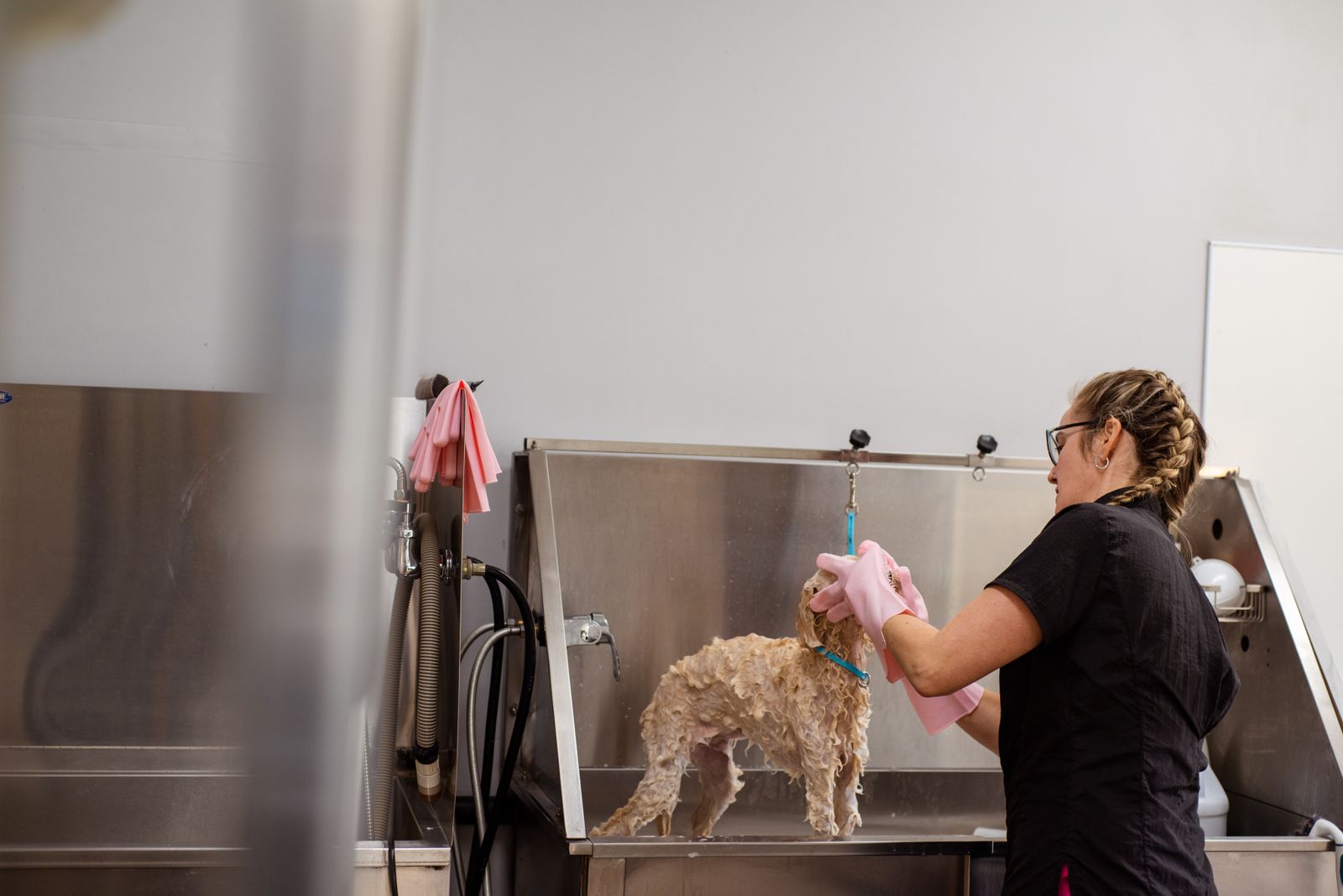
- Bather or brusher: bathes, dries, brushes out and de-sheds dogs, and often trims nails and cleans ears. This is the usual entry-level job.
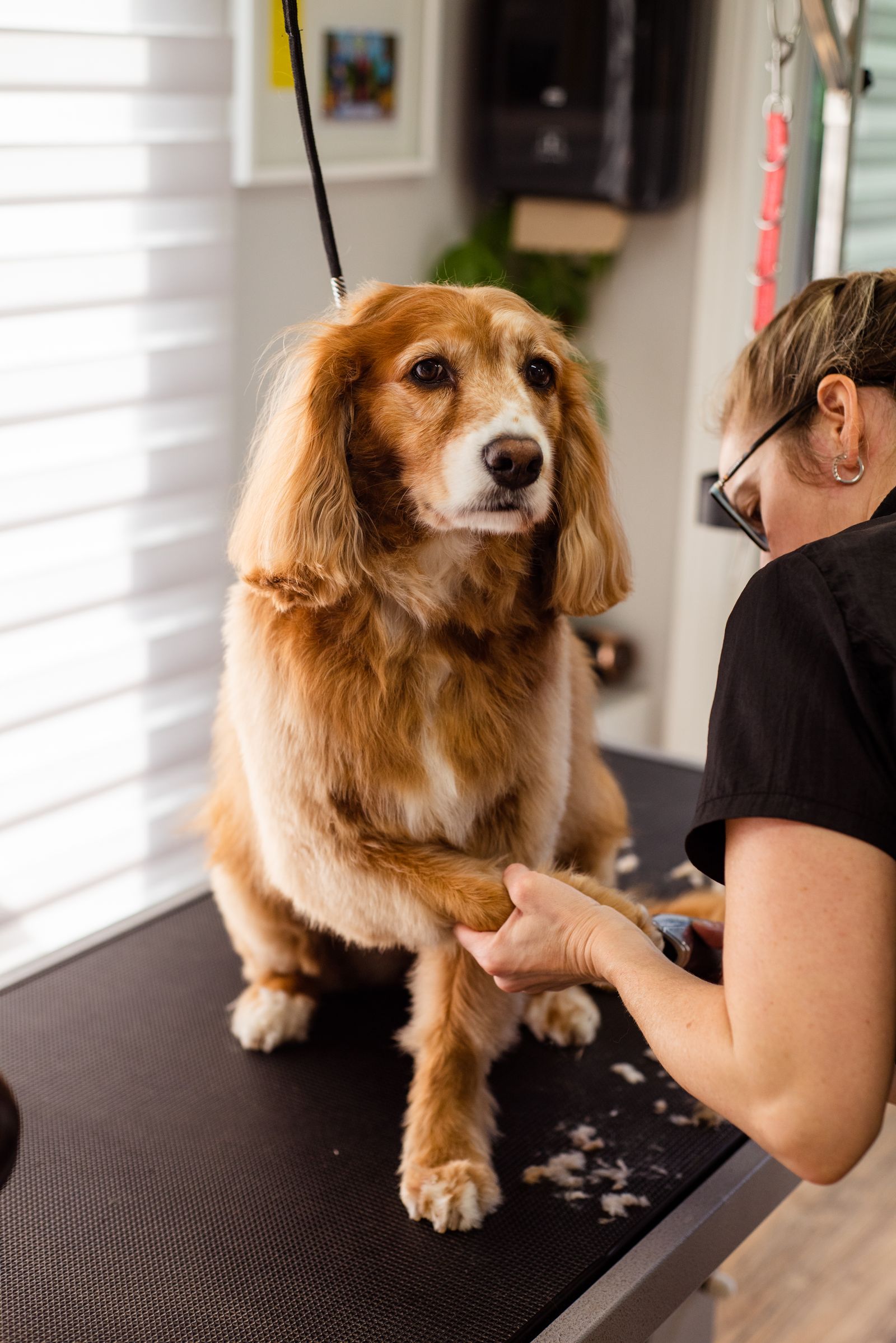
- Groomer or stylist: does the haircuts. That means clipper work, scissoring, breed trims and handling difficult coats such as matting.
Groomers work in independent salons, pet store chains, vet clinics, kennels and daycares, mobile grooming vans and home-based studios. The US Bureau of Labor Statistics (BLS) notes that groomers also book appointments, sell products and flag problems that may need a veterinarian. That last part matters. A good groomer often spots a lump, ear infection or skin issue before the owner does, then tells the owner to see their vet rather than guessing at a diagnosis.
Do you need a license to groom dogs?
Usually not as an individual. In both countries, licensing rules target grooming businesses and facilities rather than the person holding the clippers. Here is how it breaks down.
In the US, no state licenses dog groomers as a profession the way states license hairstylists. A few places regulate grooming businesses instead, and Colorado also licenses independent contractor groomers. New Jersey lawmakers have introduced groomer licensing bills in recent sessions. A 2024 version would have required a state license and exam through the State Board of Veterinary Medical Examiners. As of late 2026, none had become law, so watch for changes if you work there.
In Canada, Job Bank, the federal government’s labor market site, lists dog groomers (NOC 65220) as an occupation that is not regulated. Provinces do not license groomers. Your city may still require a business licence or zoning approval for a salon or home-based studio.
| Location | What is regulated | Published cost |
|---|---|---|
| Connecticut | Anyone in the business of grooming, or keeping a grooming facility, needs a state license (Conn. Gen. Stat. § 22-344) | $200 USD, renewed every two years |
| Colorado | Grooming facilities, mobile groomers and independent contractor groomers are licensed under the Pet Animal Care Facilities Act (PACFA) | $400 USD (facility, including mobile); $350 USD (independent contractor groomer) |
| New York City | Grooming establishments need a city health department permit; a supervising manager must pass the city’s Animal Care and Handling Course, and the shop must pass an inspection | $30 USD per year for a shop without overnight animals |
| New Jersey | Groomer licensing bills introduced but not passed | None in force |
| Canada (all provinces) | Groomers not regulated; municipal business licences and zoning may apply | Varies by city |
The takeaway: if you plan to work for a salon, licensing is your employer’s job. If you plan to work for yourself, check state, provincial and city rules before you take your first paying client.
How to become a dog groomer in 6 steps
There is no single required route, but most successful groomers follow some version of these steps.
Step 1: Get comfortable handling dogs
Grooming is close-contact work with animals that may be scared, wriggly or sore. Before you pay for training, spend time around many kinds of dogs. Volunteer at a shelter, work at a daycare or kennel, or apply for a bather job at a salon. A bather role is the best test of all, because you see the real pace, noise and physical demands of a busy grooming room.
Pay attention to how you feel after a full day on your feet, lifting dogs and working with water and dryers. If you still love it after a month, you are a good candidate.
Step 2: Choose your training path
The BLS says groomers typically learn by working under an experienced groomer, though many also attend grooming schools. Each path trades cost against speed and structure. Here are your four main options:
| Path | Typical length | Real cost examples | Best for |
|---|---|---|---|
| In-person grooming school or college program | About 2 to 5 months for private schools; up to a year for some college programs | Des Moines Area Community College (Iowa): $5,250 USD for 230 hours. Conestoga College (Ontario): one-year certificate, first term listed at about $4,643 CAD including supplies (2026-27) | People who want structure, lots of supervised practice and a credential |
| Online course with in-person practice | About 6 to 12 months, self-paced | Animal Behavior College: from $3,499 USD if paid in full, including a toolkit and in-person training with a professional groomer | People who need to keep a job while they study |
| Apprenticeship or on-the-job training | Several months to two years | Often no tuition; you may earn a bather’s wage while learning | People who can find a skilled mentor willing to teach |
| Self-taught | Varies | Tools and practice dogs only | Not recommended as a sole route; safety gaps are common |
Whichever route you pick, ask any school or mentor these questions before you commit:
- How many hours will I spend grooming real dogs, and how many dogs per instructor?
- Does the course teach safe handling, restraint and first aid, not just haircuts?
- Which tools are included, and what will I need to buy separately?
- Can I talk to recent graduates about whether they found work?
Step 3: Build the core skills
Haircuts get the attention, but safety and handling skills keep you employed. Salon owners look for groomers who can do all of the following:
- Handle dogs calmly and safely, including nervous, elderly and reactive dogs, and know when to stop a groom.
- Work every coat type, from double coats that need de-shedding to curly coats that mat easily.
- Use clippers, blades and shears correctly, including keeping them cool and sharp.
- Trim nails and clean ears without causing pain or injury.
- Know common breed trims, such as poodle, terrier and spaniel styles.
- Notice health warning signs such as skin sores, lumps, parasites or ear odor, and refer the owner to a vet.
- Talk to owners clearly, especially when a matted coat means a short shave instead of the style they wanted.
Step 4: Consider certification
Certification is optional in both countries, but it signals skill to employers and clients. The two best-known programs are run by US groomer associations:
- National Dog Groomers Association of America (NDGAA): its National Certified Master Groomer program requires a written exam for each breed group and hands-on skills tests on set breeds across four groups: non-sporting, sporting, long-legged terriers and short-legged terriers. You must attend at least one NDGAA workshop.
- International Professional Groomers (IPG): offers its own Certified Master Groomer program, which also combines written and practical testing.
Many school programs also issue their own certificate. A pet first aid and CPR course is a smart, low-cost add-on wherever you train.
Step 5: Land your first grooming job
Most new groomers start in a salon, pet store chain or vet clinic. That gives you a steady stream of dogs, experienced colleagues and an employer who carries the insurance. Build a simple portfolio of before-and-after photos (with owners’ permission) and expect a short trial groom during the interview.
Your first year is about speed and consistency. A groomer who can finish dogs safely and on schedule becomes valuable quickly, and that is when better pay and commission splits open up.
Step 6: Decide whether to go independent
Many groomers eventually open a home studio, a mobile van or their own salon. Working for someone else first is worth it. You learn pricing, scheduling and client handling on someone else’s risk. When you are ready, you will need to sort out the following:
- Business setup: registration, any state or city facility license (see the table above) and a separate business bank account.
- Insurance: general liability plus care, custody and control coverage, which protects you if a dog is hurt while in your care. Standard liability policies often exclude this.
- Equipment: a grooming table, tub, high-velocity dryer, clippers, blades and shears, plus a van conversion if you go mobile.
- Pricing: set rates from your real costs and local competitors, not from what feels fair.
Our guide on how to start a dog walking business walks through registration, insurance and pricing math for a solo pet service in both countries, and most of it applies to grooming too.
How long does it take to become a dog groomer?
Most people take a few months to a year to become job-ready, depending on the route. Getting fast and confident across many breeds takes ongoing salon practice beyond that.
Here is a realistic timeline for each stage:
| Stage | Typical time |
|---|---|
| Bather or kennel experience before training (optional but helpful) | 1 to 6 months |
| In-person grooming school | About 2 to 5 months full time |
| Online course with in-person practice | About 6 to 12 months part time |
| Apprenticeship | Several months to 2 years |
| Master groomer certification (NDGAA or IPG) | Usually pursued after gaining salon experience; requires several written and practical tests |
How much does dog grooming school cost?
Formal programs we reviewed cost roughly $3,500 to $5,300 USD in the US, and a one-year Ontario college certificate costs about $4,600 CAD for its first term alone. Apprenticeships can cost nothing in tuition. Here is what the examples include:
- Des Moines Area Community College (US): $5,250 USD for a 230-hour certificate, made up of 150 hours of in-person lab and 80 hours online. The college says training, books and supplies are free for qualified applicants.
- Animal Behavior College (US, online): from $3,499 USD paid in full, or $3,850 USD on a payment plan. It includes a 30-plus-piece toolkit, in-person training with a professional groomer and pet CPR and first aid certification.
- Conestoga College (Canada): a one-year Ontario College Certificate in pet grooming. The first term is listed at $4,642.76 CAD for 2026-27, including a $1,552 supply fee.
Budget beyond tuition, too. Plan for tools not covered by your program, travel, and certification testing fees later on. Ask about grants or funded seats, since some colleges cover costs for qualified applicants.
A worked example (hypothetical)
Say Jordan works full time at a pet store and wants to switch careers. Jordan has two realistic options. All numbers below are hypothetical except the published tuition figures.
| Line item | Option A: online course | Option B: salon apprenticeship |
|---|---|---|
| Tuition | $3,499 (published, paid in full) | $0 |
| Extra tools and supplies | $300 (hypothetical) | $800 (hypothetical; own shears and brushes) |
| Lost income while training | $0 (keeps current job) | Lower bather wage for 6 to 12 months |
| Time to job-ready | About 9 months part time | About 6 to 12 months full time |
| Main risk | Less daily hands-on practice | Quality depends entirely on the mentor |
Neither option is wrong. The online route protects Jordan’s income. The apprenticeship gives far more real dogs, which is what employers test for. Many groomers combine the two, studying online while bathing at a salon.
How much do dog groomers make?
Employed groomers earn modest hourly pay, and experienced groomers who build a loyal client list or run their own business can earn more. The official data only shows part of the picture:
- US: the BLS groups groomers with animal caretakers, whose median pay was $35,360 USD a year in May 2025. That figure excludes the self-employed and does not include tips.
- Canada: Job Bank lists a median wage of $18.00 CAD an hour for dog groomers (NOC 65220).
Demand looks solid. The BLS projects employment of animal care and service workers to grow 11% from 2025 to 2035, much faster than the average for all jobs. For the bigger spending picture behind that growth, see our pet industry statistics for 2026.
Is dog grooming a good career?
It can be, if you go in with clear eyes. The upsides are real: low training costs compared with most skilled trades, steady local demand and a clear path to self-employment. The downsides are real too:
- It is physical. Expect long hours standing, lifting dogs, and strain on your hands, wrists and back.
- Bites and scratches happen. Handling skills reduce the risk but never remove it.
- Pay starts low. Income usually rises with speed, a loyal client base or business ownership.
- Owners can be the hard part. Explaining a necessary shave-down takes tact.
If the job fits, grooming also opens doors to related businesses, from mobile salons to retail. Some groomers even launch their own products. Our guide on how to start a dog treat business explains the extra rules that apply once you sell food.
The bottom line
You can become a dog groomer without a degree or a personal license in the US or Canada. Start with hands-on dog experience, pick a training path that fits your budget and schedule, and prioritize safe handling over fancy cuts. Work in a salon before you go solo, and check facility licensing rules in places like Connecticut, Colorado and New York City before you open your own business. For more guides on running a pet service business, browse our Pet Business Playbook.
How we researched this article
We reviewed US Bureau of Labor Statistics and Canada Job Bank labor data, state statutes and licensing pages in Connecticut and Colorado, New York City permit rules, New Jersey legislation, published tuition from US and Canadian schools and the National Dog Groomers Association of America’s certification requirements. This is general information, not legal or career advice.
Frequently asked questions
How long does it take to become a dog groomer?
Most people become job-ready in a few months to a year. In-person grooming schools often run about two to five months, online courses with in-person practice about six to twelve months, and apprenticeships anywhere from several months to two years. Building speed across many breeds takes more salon practice after that.
Do you need a license to be a dog groomer?
Usually not as an individual. No US state licenses groomers as a profession, and Canada’s Job Bank lists grooming as unregulated. Some places license the business instead: Connecticut and Colorado license grooming businesses, Colorado also licenses independent contractor groomers, and New York City requires a grooming establishment permit.
How much does dog grooming school cost?
Programs we reviewed in November 2026 ranged from about $3,500 to $5,300 USD in the US, such as Animal Behavior College’s online course from $3,499 and a 230-hour community college certificate at $5,250. In Canada, Conestoga College’s one-year certificate lists about $4,643 CAD for the first term. Apprenticeships may cost nothing in tuition.
Can you become a dog groomer without going to school?
Yes. The US Bureau of Labor Statistics says groomers typically learn by working under an experienced groomer, and no school credential is legally required in the US or Canada. An apprenticeship or bather job that grows into grooming is a common route. Formal training can still help you learn safe handling faster.
How much do dog groomers make?
The BLS groups US groomers with animal caretakers, whose median pay was $35,360 USD a year in May 2025, excluding the self-employed and tips. In Canada, Job Bank lists a median of $18.00 CAD an hour for dog groomers. Experienced groomers and salon owners can earn more.
Is dog grooming certification worth it?
It is optional but useful. Certifications such as the NDGAA’s National Certified Master Groomer or IPG’s Certified Master Groomer show employers and clients that your skills have been tested in writing and on real dogs. Many groomers pursue them after gaining experience, along with a pet first aid course.