
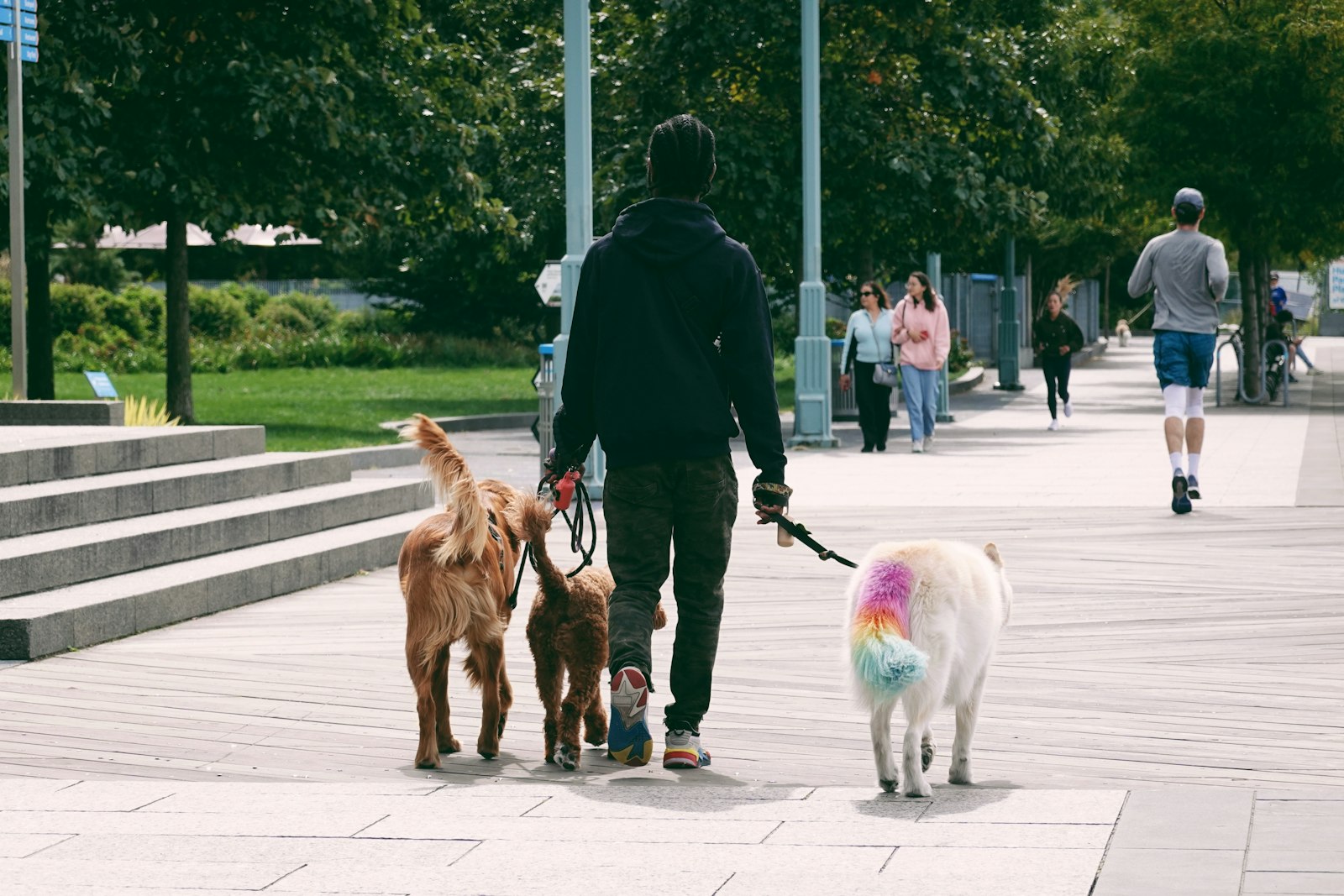
How to Start a Dog Walking Business: Permits, Insurance and Pricing (US and Canada)

Quick answer: To start a dog walking business, register the business, buy liability insurance with care, custody and control coverage, check your city’s rules on how many dogs you can walk at once, and set prices from your real costs. Startup costs are low, but permits, insurance and dog limits vary by city in both the US and Canada, so check local rules before your first walk.
Last updated: October 22, 2026 · General information, not legal or tax advice.
Learning how to start a dog walking business is easy to underestimate. You need no storefront, no inventory and no formal license in most places. That low barrier is exactly why the market is crowded with casual walkers, and why the people who treat it like a real business tend to win the best clients.
Demand is there. The American Pet Products Association (APPA) counts about 71 million US households with a dog in 2025, and the Canadian Animal Health Institute (CAHI) estimates about 7.2 million dogs in Canada as of 2024. This guide walks you through the steps that matter: legal setup in both countries, city permits and dog limits, insurance costs, pricing math, safety systems and finding your first clients.
Is a dog walking business worth starting?
Yes, if you want a low-cost, local service business and you are comfortable outdoors in every season. Pet services are one of the faster-growing parts of the industry. APPA’s 2026 State of the Industry report puts US spending on “other services” such as grooming, boarding, training and walking at $14.3 billion in 2025, up about 8%.
The job market points the same way. The US Bureau of Labor Statistics (BLS) projects employment of animal care and service workers to grow 11% from 2025 to 2035, much faster than average. It lists their median pay at $35,530 a year ($17.08 an hour) in 2025. That figure covers employees across the field, so a business owner who prices well can earn more, and one who prices badly can earn much less.
Before you commit, be honest about the trade-offs:
- Your income depends on your schedule. Most demand sits in a midday window while owners are at work, which caps how many walks one person can do.
- Weather does not cancel work. Summer heat in the southern US and winter in much of Canada are part of the job.
- Trust is the product. You hold house keys and someone’s family member. One lost dog can end a small business.
Step 1: Research your local market and choose a niche
Start with a map, not a logo. Dog walking is hyperlocal, so your real market is the few neighborhoods you can cover without losing half your day to driving. Look for dense areas with apartments, condos and commuters, since those owners have the least time and the fewest yards.
Then look at who already serves that area. Check walker profiles on apps, local Facebook groups, Google Maps listings and flyers at vet clinics and pet stores. Note their prices, services and reviews. You are looking for an opening, such as one of these:
- Solo walks only for reactive, senior or anxious dogs that should not join a group
- Puppy visits for potty breaks and socialization while owners work
- Adventure or trail outings for high-energy breeds, where parks allow commercial walkers
- Small-dog specialists in condo-heavy neighborhoods
A clear niche makes marketing easier and lets you charge more than the generalist down the street.
Step 2: Set up the business legally (US and Canada)
The paperwork for a dog walking business is light, but it is not zero. Most new walkers start as a sole proprietor because it is simple and cheap. Some later form an LLC (US) or incorporate (Canada) for liability separation or tax reasons; ask an accountant before you do.
In the United States
- Business name: if you operate under a name other than your own, register it as a “doing business as” (DBA) name with your state or county.
- Local business license: many cities and counties require a general business license or home occupation permit, even for a one-person service.
- Tax ID: a sole proprietor with no employees can often use their Social Security number, but you will need an Employer Identification Number (EIN) from the IRS once you hire staff or form certain entities.
- Taxes: self-employed people pay self-employment tax for Social Security and Medicare (15.3% under IRS rules) on top of income tax, so set aside part of every payment.
In Canada
- Business name: if you trade under a name other than your own legal name, register it with your province (for example, under Ontario’s business names rules).
- Municipal licence: check whether your city requires a business licence for home-based or mobile services.
- GST/HST: according to the Canada Revenue Agency, you are a “small supplier” and do not have to register until your taxable revenue exceeds $30,000 CAD over four consecutive calendar quarters. You can register voluntarily before that.
- Business Number: the CRA issues a Business Number when you open a GST/HST or payroll account.
In both countries, open a separate business bank account from day one. It makes tax time far easier and shows clients and insurers that you are a real operation.
Step 3: Check city permits and dog limits
This is the step most guides skip, and it is the one that can get you fined. There is no national dog walking license in either country. Instead, cities, counties and park agencies set their own rules, usually about how many dogs one person can walk and where commercial walkers can operate. Here are real examples to show the range.
| Location | Rule (examples) | Published cost |
|---|---|---|
| Toronto, ON | Commercial dog walker permit to walk 4 to 6 dogs at once in city parks; $2 million commercial general liability insurance naming the City as additional insured | $305.99 CAD per year (2026), plus tax; shorter terms available |
| Metro Vancouver regional parks, BC | Commercial permit required to walk dogs in regional parks; $5 million liability insurance; each handler wears an issued vest | $200 CAD application fee plus $250 CAD per walker, plus GST; $50 CAD per vest |
| Calgary, AB | Professional dog walker permit needed to walk more than six dogs off leash at once | See the city’s fee schedule |
| Marin County Parks, CA | Permitted walkers may have up to 6 dogs (no more than 3 off leash); permit requires a business license, insurance and a completed dog walker training course | $150 USD per year, plus a $50 USD vest deposit |
| Golden Gate National Recreation Area, CA | Commercial Use Authorization required in designated areas; no more than 6 dogs at a time | Set by the National Park Service |
Notice the pattern. Limits of about six dogs are common, insurance is often a condition of the permit, and some parks are capped. Metro Vancouver, for example, says Pacific Spirit Regional Park is already full for 2026. If your business plan depends on one popular park, call the permit office before you print business cards.

Step 4: Get dog walker insurance
Insurance is not legally required everywhere, but you should treat it as mandatory. Permits often demand it, many clients ask for proof, and a single dog bite or vet bill can wipe out a year of profit. Look for these coverages:
- General liability: covers injury to other people or damage to their property, such as a dog in your care biting a passerby.
- Care, custody and control: covers injury, illness or death of a dog while it is in your care. Standard general liability often excludes this, so check.
- Lost key coverage: pays to rekey a client’s home if you lose their keys.
- Bonding: protects clients against theft by you or an employee, and reassures nervous owners.
- Commercial auto: needed if you drive dogs anywhere, since personal auto policies may not cover business use.
- Workers’ compensation: required in most US states once you have employees; provinces run their own workplace insurance systems.
Costs are lower than many new walkers expect. In the US, the broker Insureon reports a median of about $42 a month ($500 a year) for general liability among dog walkers who get quotes through it, and about $245 a month for commercial auto. In Canada, the broker Zensurance said in May 2026 that an independent walker can often get coverage starting around $100 a year with $1 million in general and professional liability. Your price depends on your city, the number of dogs you walk, staff and claims history.
Step 5: Decide what to charge
Price from your costs and your market, never from a guess. As a US benchmark, Rover reports an average of $21.45 for a 30-minute walk nationally, with a typical range of $16 to $25, and $29 to $38 for a 60-minute walk (data as of September 2025). Big-city rates run higher. Rover does not publish an equivalent national figure for Canada, so Canadian walkers should check a dozen local listings and set prices in CAD from that range.
Common pricing structures include the following:
| Service | How walkers usually price it | Notes |
|---|---|---|
| Solo walk (30 minutes) | Per walk; your core price | Rover’s US average is $21.45 (Sept 2025) |
| Solo walk (60 minutes) | Per walk, less than double the 30-minute price | Rover’s US range is $29 to $38 |
| Group walk | Per dog, below the solo rate | Higher earnings per hour; check local dog limits |
| Puppy or potty visit (15 to 20 minutes) | Per visit, a little below a 30-minute walk | Popular with new puppy owners |
| Extra dog, same household | Flat add-on per dog | Keeps families loyal |
| Weekly package | Five walks billed weekly, small discount | Smooths cash flow and reduces cancellations |
A worked example (hypothetical)
Here is how the math might look for a solo walker in a mid-sized US city. Every number is hypothetical, so swap in your own.
| Line item | Direct clients | Through an app |
|---|---|---|
| Walks per day | 8 at $22 | 8 at $22 |
| Working days per year (5 days a week, 48 weeks) | 240 | 240 |
| Gross bookings | $42,240 | $42,240 |
| Platform service fee (Rover keeps 20%) | $0 | -$8,448 |
| Insurance, software, gear, phone, marketing | -$2,500 | -$1,500 |
| Mileage and vehicle costs | -$2,000 | -$2,000 |
| Profit before income and self-employment tax | $37,740 | $30,292 |
Two lessons jump out. First, eight walks a day is close to the ceiling for one person, so growth eventually means group walks, higher prices or hiring. Second, apps are a useful way to find your first clients, but the fee adds up. Many walkers use an app to build reviews, then move repeat clients to direct booking where the app’s terms allow it.
Step 6: Build your safety and client systems
Professional systems are what separate a business from a side gig. They also protect you when something goes wrong. Before your first paying walk, put these in place:
- A written service agreement. Cover services, prices, payment terms, cancellation policy, weather policy, key handling and permission to seek emergency vet care.
- A client and dog profile. Record the vet’s name and phone number, vaccination status, allergies, behavior quirks and an emergency contact.
- A meet-and-greet for every new dog. Watch how the dog handles the leash, other dogs and strangers before you accept it, and decline dogs you cannot handle safely.
- Gear checks. Use secure, well-fitted collars or harnesses, carry spare leashes and waste bags, and bring water in hot weather.
- A key system. Label keys with a code, not the client’s address, and store them securely.
- An emergency plan. Know the nearest emergency vet on each route, and take a pet first aid course so you can respond calmly. For anything beyond basic first aid, the dog’s own vet or an emergency clinic makes the call.
No license is needed to walk dogs in most places, but credentials build trust. Options include pet first aid courses, Pet Sitters International’s Certified Professional Pet Sitter (CPPS) exam, and local training courses. Some park permits, such as Marin County’s, require a specific course.
Once you have more than a handful of clients, scheduling software becomes worth it. Look for tools that handle booking, invoicing, GPS walk reports and client messaging in one place, and compare monthly costs against the time they save you.
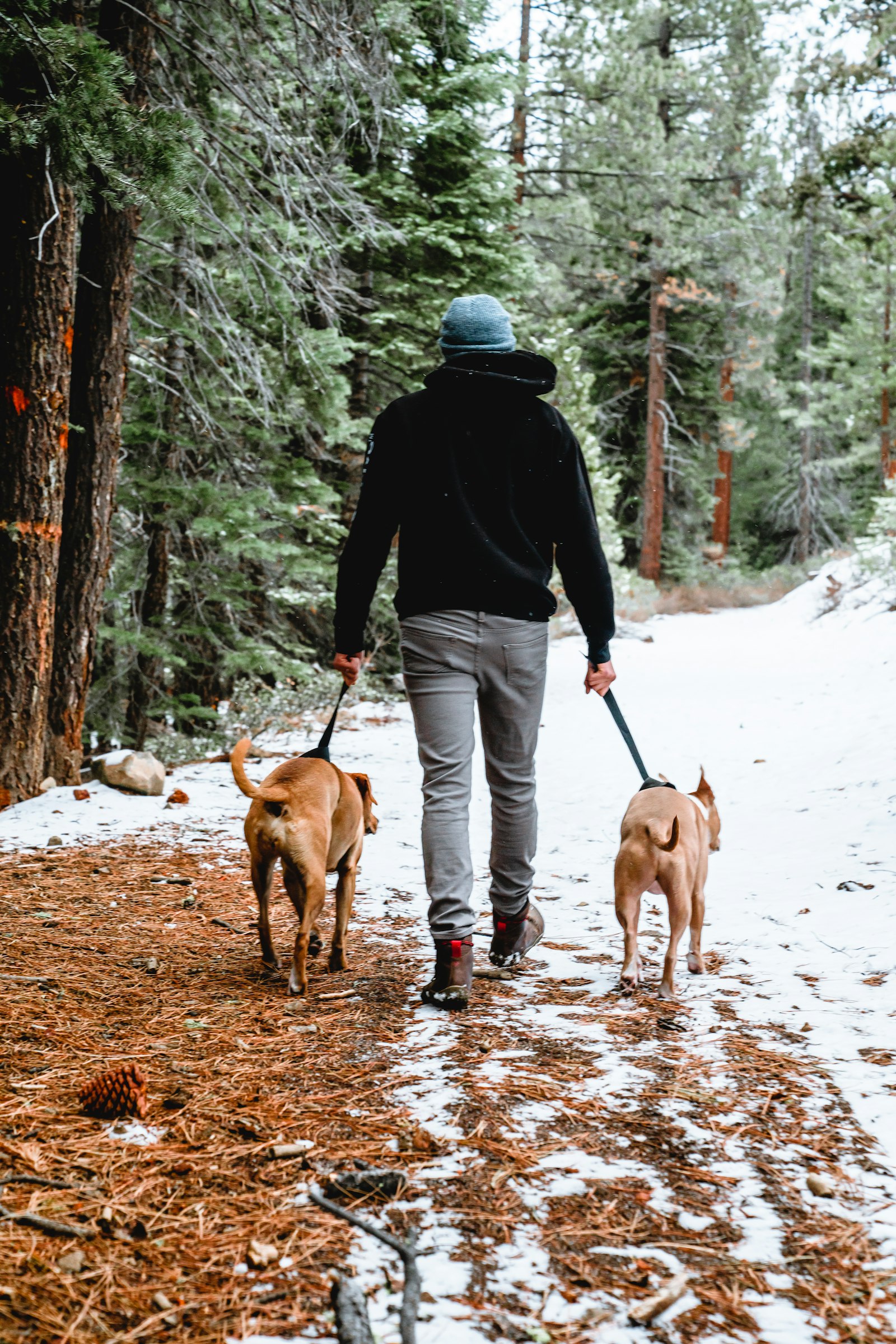
Step 7: Find your first clients
Your first ten clients will probably come from people who can see you working. Focus on visibility in your chosen neighborhoods before you spend on ads. These channels tend to work best:
- A Google Business Profile with your service area, prices, photos and a steady flow of reviews
- Referral partners such as groomers, trainers, vet clinics, pet stores and condo concierges
- Neighborhood groups on Facebook, Nextdoor and building message boards
- Pet care apps to build early reviews, with the 20% fee in mind
- A simple referral reward, such as a free walk for every client who sends you a new one
Send owners a short report after every walk, with a photo, potty notes and anything unusual. It costs you two minutes and is the single best retention tool you have.
Step 8: Grow from solo walker to a team
When your midday window is full, you have three levers: raise prices, add group walks, or hire. Hiring changes the business the most. You will need background checks, training, a handbook and the right classification for each walker.
Classification matters in both countries. In the US, the IRS and state agencies look at how much control you have over the work to decide whether someone is an employee or an independent contractor. In Canada, the CRA applies a similar test. Getting it wrong can mean back taxes and penalties, so speak with an accountant before you bring on your first walker. You will also need payroll accounts, an EIN in the US and, in most cases, workers’ compensation or provincial workplace insurance.
Growth can also mean adding related services. Pet sitting, puppy visits and pet taxi trips all fit the same client base. Some walkers eventually add retail, such as their own treats. If that interests you, read our guide on how to start a dog treat business, because treats come with a separate set of licensing and labeling rules.
How to start a dog walking business: your startup checklist
Use this list to track your launch:
- Service area, niche and price list decided
- Business name registered (DBA in the US, provincial registration in Canada) if not using your own name
- Local business license checked or obtained
- City or park dog walker permit checked or obtained
- Liability insurance with care, custody and control coverage in place
- Business bank account open; tax savings plan set
- Service agreement and client intake form ready
- Pet first aid course completed
- Google Business Profile live and first referral partners contacted
The bottom line
Starting a dog walking business costs little, but the walkers who last treat it as a business from day one. Register properly, carry insurance that covers the dogs themselves, learn your city’s dog limits and price from real numbers. Then win your neighborhood through reliability and great walk reports. For the wider market picture, see our pet industry statistics for 2026, and find more guides for service businesses in our Pet Business Playbook.
How we researched this article
We reviewed official permit pages from US and Canadian cities and park agencies, labor data from the US Bureau of Labor Statistics, Canada Revenue Agency tax guidance, industry data from APPA and CAHI, published rate data from Rover and insurance cost data from US and Canadian brokers. This is general information, not legal, tax or insurance advice, so confirm requirements with your local authorities and a qualified professional.
Frequently asked questions
Do you need a license to start a dog walking business?
Usually not a dog walking license as such. In both the US and Canada, you may need a general business license from your city, a registered business name if you use one, and a commercial dog walker permit in some cities or parks, such as Toronto or Marin County. Check your local rules before your first walk.
How much does it cost to start a dog walking business?
Startup costs are low because you need no premises. The main costs are business registration, liability insurance, leashes and gear, a phone and basic marketing. US broker Insureon reports a median of about $500 USD a year for dog walker general liability, and some Canadian walkers can find cover from around $100 CAD a year.
How many dogs can you walk at once?
It depends on your city and park rules. Many places cap commercial walkers at about six dogs. Toronto’s permit covers four to six dogs, Marin County Parks allows up to six with no more than three off leash, and Calgary requires a permit to walk more than six dogs off leash.
Is a dog walking business profitable?
It can be, because overhead is low. Profit depends on how many walks you fit into the midday window, your prices and whether you pay a platform fee. In our hypothetical example, a solo walker doing eight $22 walks a day keeps about $37,700 before tax with direct clients, versus about $30,300 through an app.
What insurance does a dog walker need?
At minimum, general liability plus care, custody and control coverage, which protects you if a dog in your care is hurt. Many walkers also add lost key coverage and bonding. Add commercial auto if you drive dogs, and workers’ compensation or provincial workplace insurance once you hire staff.
Should I use Rover or start my own dog walking business?
Many walkers do both at first. Apps help you find clients and build reviews quickly, but Rover’s help center says it keeps a 20% service fee from each booking. Running your own business means more marketing work, but you keep the full price and own the client relationship.