Why Do Dogs Eat Grass? What the Research Says and When to Worry

Quick answer: Why do dogs eat grass? For most dogs it is normal, inherited behavior, not a sign of illness. In a survey of 1,571 owners, 68% said their dogs ate plants daily or weekly, and only 22% said their dogs regularly vomited afterward. Grass becomes a concern when it is treated with chemicals, or when your dog suddenly eats it frantically, vomits repeatedly or seems unwell.
Last updated: October 26, 2026 · General information, not veterinary advice.
You let your dog out for a quick bathroom break, and instead of sniffing around, they start mowing the lawn like a small, furry goat. It is one of the most common questions dog owners ask vets: why do dogs eat grass, and should you stop it?
The popular answer is that dogs eat grass to make themselves throw up when they feel sick. The research tells a different story. Most grass-eating dogs are healthy, most do not vomit afterward, and the habit probably runs deeper than any one upset stomach.
This guide covers what the studies actually found, the most likely reasons your dog grazes, the real risks (which are mostly about what is on the grass), the signs that mean a vet visit, and practical ways to curb the habit. Where the rules differ, we cover both the US and Canada.
Why do dogs eat grass? The short answer
Dogs eat grass mainly because it is a normal, likely inherited behavior, and many simply seem to enjoy it. Boredom, an upset stomach or a craving for something to chew can play a part in some dogs. Nobody has proven one single cause, and different dogs probably graze for different reasons.
What vets agree on is this: occasional grass eating in a dog that is otherwise eating, playing and pooping normally is not, by itself, a reason to worry.
What the research says about dogs eating grass
Surprisingly few studies have looked at this closely, but the two best-known ones point the same way.
The largest is a 2008 study from the University of California, Davis, published in Applied Animal Behaviour Science by Sueda, Hart and Cliff. The team surveyed owners of dogs that had daily access to plants. Of 1,571 usable internet survey responses, 68% said their dogs ate plants daily or weekly. Grass was the most commonly eaten plant, named for 79% of dogs.
The key findings for owners:
- Few dogs looked sick first. Only about 8% to 9% of dogs frequently showed signs of illness before eating plants.
- Most did not vomit. Only 22% regularly vomited afterward.
- Younger dogs grazed more. They ate plants more often and were less likely to seem ill or vomit.
- Diet did not explain it. The researchers found no link between plant eating and diet type, sex, neuter status or breed group.
A smaller experiment by McKenzie, Brown and Price, published in the same journal in 2010, watched dogs offered fresh grass. Across 374 recorded grass-eating events, dogs vomited only twice. The dogs also ate less grass, not more, when a diet change gave them loose stools. The authors concluded that dogs did not seem to use grass to treat diarrhea, though they could not rule out other stomach issues.
| Common claim | Evidence | What we know |
|---|---|---|
| Grass eating is normal in healthy dogs | Moderate | Large owner survey (UC Davis, 2008); consistent with vet guidance |
| Dogs eat grass to make themselves vomit | Limited | Only 22% vomited regularly in the survey; 2 vomits in 374 events in the 2010 experiment |
| Dogs eat grass because they lack fiber or nutrients | Limited | Diet type showed no link in the 2008 survey; no controlled trial proves it |
| Grass eating is inherited from wild ancestors | Moderate | Plant material shows up in wolf diets; leading researchers favor this theory |
| Boredom or anxiety drives it in some dogs | Limited | Widely reported by vets and behaviorists, but not well studied |
6 likely reasons your dog eats grass
Here are the explanations for why dogs eat grass that have the most support, roughly from most to least common in a healthy adult dog.
1. It is an inherited behavior
Wild canids eat plants too. VCA Animal Hospitals notes that studies of wolf droppings have found grass in roughly 11% to 47% of samples. Benjamin Hart, a veterinary behaviorist on the UC Davis team, has suggested a possible reason: regular plant eating may have helped wild ancestors push intestinal worms through the gut. Modern dogs may keep the urge even though most now get routine parasite prevention.
2. They like the taste or texture
Some dogs are simply grazers. Many owners notice their dog gets choosier in spring, picking tender new shoots and ignoring dry or tough blades. If your dog nibbles calmly, chews the grass and then moves on, enjoyment is the most likely explanation.
3. Boredom or excess energy
A dog left alone in the yard has few things to do, and grass is always there. Young, high-energy dogs are the most likely to graze out of boredom. If the habit mostly happens when your dog is outside alone, more exercise and play are a good first step.
4. An upset stomach (sometimes)
The research above suggests this explains a minority of cases, not most. Still, the pattern matters. A dog that suddenly gulps grass urgently, barely chewing, while licking its lips or swallowing hard, may feel nauseous. That deserves attention, especially if it is new behavior.
5. Seeking fiber or something to chew
This theory is popular online, but the evidence is thin. The 2008 survey found no link between diet type and grass eating. A dog on a complete and balanced food does not need grass to meet its nutrient needs. If you suspect a diet issue, talk to your vet before adding supplements or switching food.
6. Pica: when it is more than grass
Pica means repeatedly eating things that are not food, such as dirt, rocks, fabric or plastic. Grass alone rarely counts. However, a dog that also eats soil, sticks, socks or poop should see a vet. Pica can be linked to medical problems, stress or compulsive behavior, and swallowed objects can cause blockages.
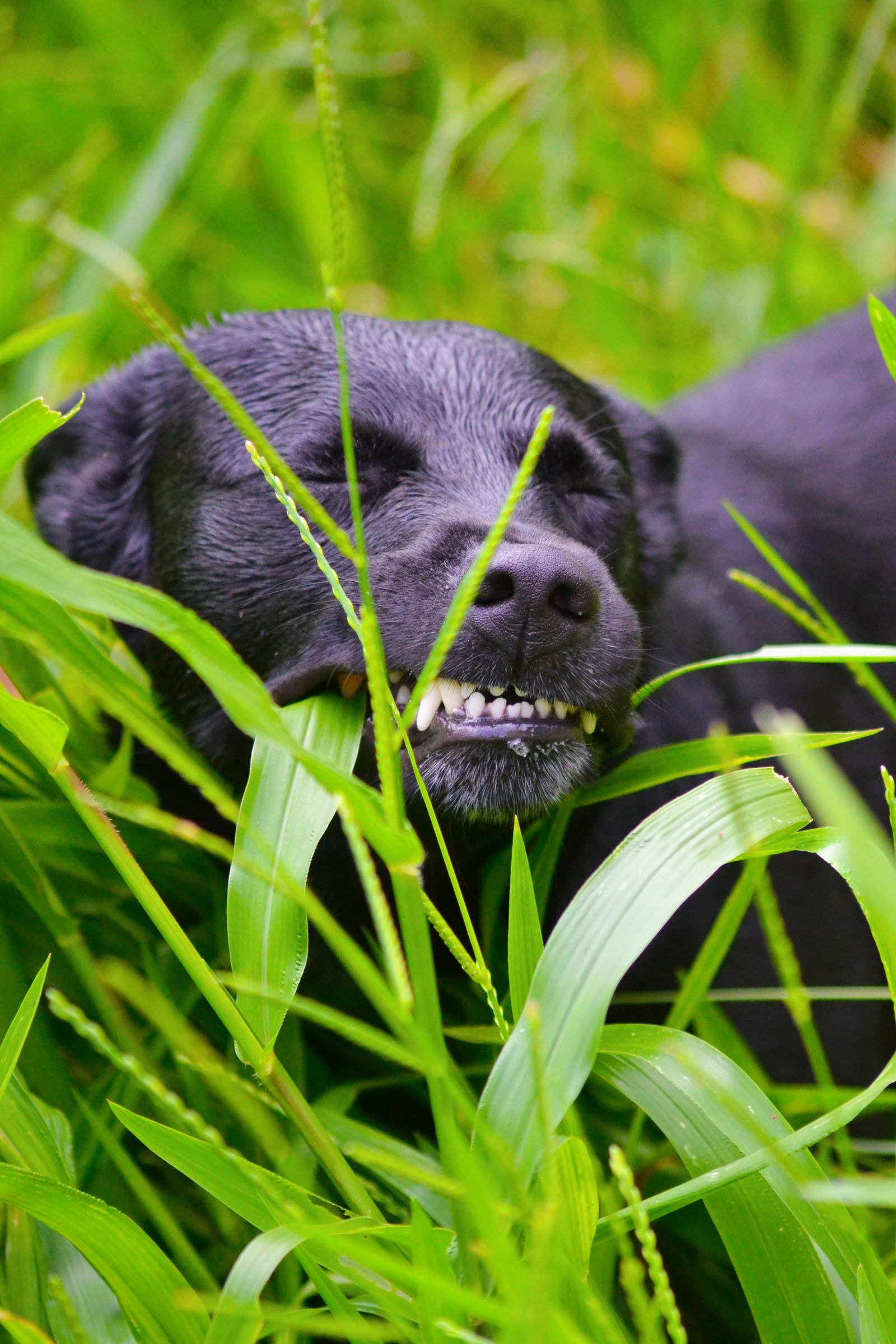
Why does my dog eat grass and throw up?
Your dog may throw up after eating grass because long blades irritate the stomach, or because it already felt queasy. But the research suggests vomiting is usually incidental to grass eating, not its purpose. Hart’s team summed it up: vomiting seems to happen alongside plant eating rather than being caused by it.
An occasional episode, where your dog brings up a wad of grass and then acts normal, is rarely a concern. Repeated vomiting is different, with or without grass. If your dog tends to vomit yellow foam on an empty stomach, the grass may be a side note. See our guide on why a dog throws up yellow bile in the morning for the feeding changes that often help.
Cleaning up is the other half of the job. If a grassy mess lands on the carpet, our guide to removing pet stains naturally covers vomit spots step by step.
Is eating grass bad for dogs? The real risks
Grass itself is not toxic to dogs. The risks come from what is on it, what grows next to it and how much your dog swallows.
Lawn chemicals
Herbicides, insecticides and fertilizers are the biggest concern. A 2013 Purdue University study in Science of the Total Environment tested urine from 25 dogs whose owners had treated their lawns. Researchers found lawn herbicides, including 2,4-D, in the dogs’ urine. Some dogs from untreated homes had them too, likely from neighboring lawns. The researchers advised letting products dry before pets go on the lawn and wiping dogs’ feet after contact.
Most fertilizer ingestions cause mild stomach upset, according to an ASPCA Animal Poison Control Center toxicologist writing in Today’s Veterinary Practice (2016). Products that contain bone meal, blood meal or insecticides are more worrying. “Weed and feed” products combine fertilizer and herbicide, so both ingredients matter.
Rules on lawn products differ by country:
- In the US, the Environmental Protection Agency (EPA) registers pesticides, and it is illegal to use one in a way that conflicts with its label. Read the label before letting your dog onto a newly treated lawn.
- In Canada, Health Canada registers pesticides under the Pest Control Products Act. Several provinces go further. Ontario, for example, has banned most cosmetic pesticide use on lawns and gardens since April 2009. Your neighborhood park or boulevard may still be treated for other reasons, so check local signs.
Toxic plants mixed in with grass
A dog that grazes may not stop at grass. The ASPCA’s toxic and non-toxic plants list includes over 1,000 entries. Several common garden plants, such as azaleas, oleander and sago palm, can cause serious poisoning in dogs. Sago palm seeds are especially dangerous and can cause liver failure. Check your yard and planters against the ASPCA list.
Intestinal parasites
Grass in parks and dog areas can be contaminated with droppings. The Companion Animal Parasite Council (CAPC) says roundworm eggs are hardy and can stay infective in soil for years. Some of these worms can also infect people, especially children. This is one reason CAPC recommends year-round parasite control and regular fecal testing. Ask your vet which plan suits your dog.
Grass awns and foxtails
Some wild grasses produce barbed seed heads, often called foxtails or grass awns. UC Davis veterinarians warn that their barbs only move one way, so they can work deeper into the nose, ears, mouth, skin or even the chest. Sudden sneezing, head shaking, pawing at the face or gagging after time in long grass needs a prompt vet check. These awns are most common in summer, once grasses dry out.
Large amounts
VCA notes that a large volume of grass can occasionally collect in the stomach and need surgical removal. This is rare, but it is another reason to curb nonstop grazing.
Normal grazing or a reason to call the vet?
Use this side-by-side as a quick guide. It is not a diagnosis, but it helps you decide whether to watch or call.
| Usually normal | Worth a vet call |
|---|---|
| Calm nibbling, chewing the grass before swallowing | Sudden, frantic gulping of grass, especially if new |
| Has grazed on and off for years | Grass eating has recently increased a lot |
| Vomits grass once, then acts normal | Vomits repeatedly, or vomiting comes with other symptoms |
| Normal appetite, energy and stools | Diarrhea, lethargy, weight loss or a poor appetite |
| Eats only grass | Also eats dirt, rocks, fabric, sticks or poop |
| Untreated grass you know is safe | Ate grass treated with chemicals, or a plant you cannot identify |
When to call your vet about grass eating
Call your vet or an emergency clinic promptly if your dog:
- Vomits several times, or cannot keep water down
- Has blood in vomit or stool, or ongoing diarrhea
- Seems lethargic, weak, or has a painful or swollen belly
- Retches without bringing anything up, which can signal bloat
- Ate grass recently treated with pesticides, or chewed a plant that may be toxic
- Starts sneezing, shaking its head or gagging after time in long grass
- Is a puppy, a senior or has a known medical condition and is vomiting
If you think your dog ate a toxic plant or a lawn product, call your vet or an animal poison hotline right away. In the US, that includes the ASPCA Animal Poison Control Center. The Pet Poison Helpline serves both the US and Canada. Both run 24/7, and a consultation fee may apply. Have the product label or a photo of the plant ready.
How to stop your dog from eating grass (or make it safer)
If your dog’s grazing is occasional and the grass is clean, you do not have to stop it. If you want to cut back, or your dog grazes on lawns you cannot vouch for, these steps help:
- Teach “leave it.” Practice indoors with a treat first, then on walks. Reward your dog the moment it turns away from the grass.
- Carry better options. A few small treats or a favorite toy make redirecting easier than pulling on the leash.
- Add exercise and enrichment. Longer walks, fetch, sniff games and food puzzles reduce boredom grazing.
- Avoid treated lawns. Watch for small lawn-care flags or signs, and steer clear of fresh treatments.
- Wipe paws after walks. A damp cloth helps remove residues your dog might otherwise lick off later.
- Make your own yard safe. Choose pet-safe lawn care, follow every label exactly and remove toxic plants.
- Stay current on parasite control. Ask your vet about a year-round plan and regular fecal tests.
- Do not punish grazing. Scolding can create anxiety, which may make the habit worse. Redirect instead.
A real-world example
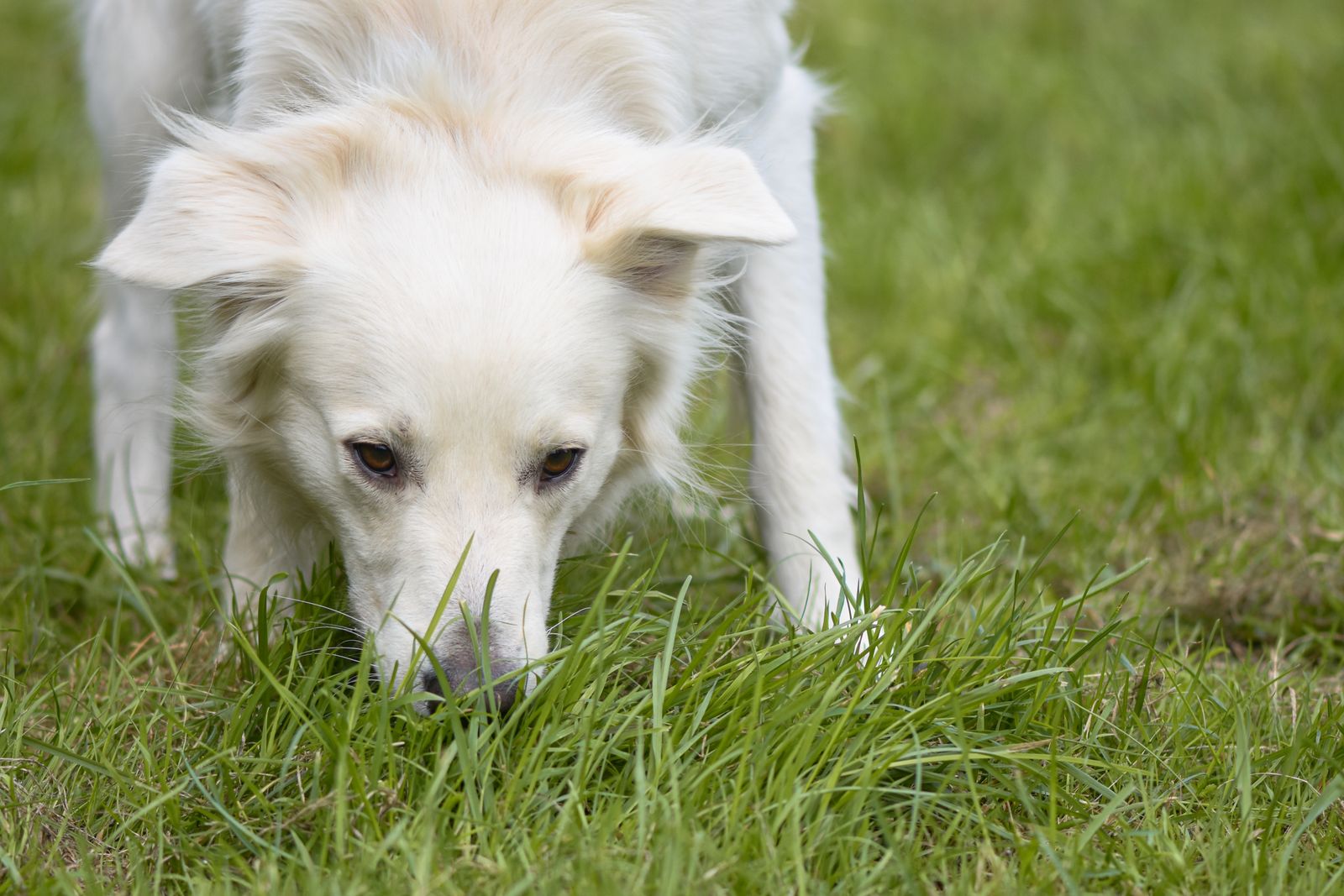
Here is a hypothetical. Your two-year-old Border Collie mix grazes for a few minutes most mornings, chews slowly and then plays as usual. She has never vomited after grazing, and your yard is untreated. This is classic normal grazing. More morning exercise and a “leave it” cue are reasonable, but there is no urgency.
Now picture the same dog suddenly eating grass frantically, licking her lips and vomiting three times in an afternoon. That is a change in behavior plus repeated vomiting. Call your vet the same day.
The bottom line
So, why do dogs eat grass? For most dogs, it is a normal and probably inherited habit, and many simply like it. The research does not support the idea that dogs mainly eat grass to make themselves sick. The real risks are lawn chemicals, toxic plants, parasites and foxtails, not the grass itself. Keep your dog off treated lawns, stay on top of parasite control, and call your vet if grazing suddenly changes or comes with vomiting, diarrhea or lethargy.
For more practical, source-backed answers on digestion, food and behavior, browse our Dog Care section, including whether dogs can eat eggs safely.
How we researched this article
This guide draws on peer-reviewed studies in Applied Animal Behaviour Science and Science of the Total Environment, plus guidance from UC Davis, VCA Animal Hospitals, the ASPCA Animal Poison Control Center, CAPC, the US EPA, Health Canada and the Government of Ontario. It is general information, not veterinary advice. If your dog is unwell, contact your veterinarian.
Frequently asked questions
Is it OK to let my dog eat grass?
Usually, yes. Occasional grazing on untreated grass is normal for most healthy dogs. In a large UC Davis owner survey, most grass-eating dogs did not seem ill beforehand and did not vomit afterward. Keep your dog off lawns treated with pesticides or fertilizer, watch for toxic plants mixed in, and stay current on parasite control.
Should I let my dog eat grass when it has an upset stomach?
It is better not to rely on grass as a remedy. Research suggests dogs rarely use grass to make themselves vomit, and grass can irritate an already upset stomach. If your dog seems nauseous, licks its lips or vomits more than once, call your vet instead, especially for puppies, seniors or dogs with health conditions.
Do dogs eat grass when they have worms?
Grass eating is not a reliable sign of worms. One theory says wild ancestors ate plants to help clear intestinal parasites, but that is unproven. Grass in parks can actually expose dogs to roundworm eggs, which CAPC says can survive in soil for years. Your vet can check for worms with a fecal test.
Why is my dog suddenly eating grass?
A sudden change matters more than the habit itself. Frantic, urgent grass eating can be a sign of nausea or stomach upset, while a gradual increase may reflect boredom or a change in routine. If the new behavior comes with vomiting, diarrhea, lip licking, lethargy or appetite changes, call your vet.
Can puppies eat grass?
Puppies often explore with their mouths, and the UC Davis survey found younger dogs ate plants more often than older dogs. A little untreated grass is rarely a problem, but puppies are more vulnerable to parasites and toxins. Supervise them outdoors, keep them off treated lawns and follow your vet’s deworming plan.
Why does my dog eat grass in the morning?
Some dogs graze first thing simply because it is their first time outside. Others may feel queasy on an empty stomach, the same pattern that causes some dogs to vomit yellow bile in the morning. If your dog also brings up yellow foam, ask your vet whether a bedtime snack or smaller, more frequent meals could help.